
Product Integration - Usability killer?
Posted by gopalshenoy on April 14, 2008
I used to own (until it was stolen
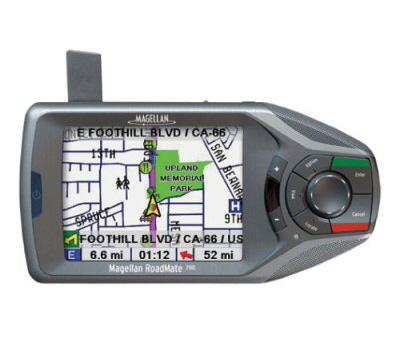
) a Magellan Roadmate 700 series portable GPS system. The system was so simple to use - it did one thing - GPS and it did it very well. The controls were very easy to use and programming it for a trip was a breeze.
On my new Toyota Camry, I now have the built-in navigation system.
The system controls not only the GPS, but also my bluetooth telephone via speed dial, phonebook etc, the four disc CD changer and a bunch of other things. Operating it is probably as complicated as a 747 cockpit - you have so many options and one wrong click you end up starting over. The other day my wife was going to Boston for dinner. If she had followed the GPS, she would have taken the longest route possible and got there an hour and a half later for what normally takes 45 minutes.
So what has probably happened here - Toyota had to create this one product that integrates the GPS, CD changer, the blue tooth telephone, the trip information and the other 15 things I have not discovered yet. It probably started as one component, which then had to be reworked to integrate the second component and so on. When everything was said and done, we have what I get to use now. It sure does meet all product functionality requirements that it was set to achieve, but it falls well short of usability requriements - thanks to product integrations. Do your products suffer from this same problem?


April 14, 2008 at 5:54 pm
I had a product that ran a similar course to the GPS system you describe. It started out as a straight-forward platform for a well-defined set of core solutions. However, over the next few years it became a huge, feature-filled mess. One of the biggest problems was the need to put any feature that might be used twice or more into the “platform” because “that’s where common features go.” When I took over I said “no” to a lot of groups and was not the most popular guy. But we made good progress.
I’ve since moved on to another company where I have control over the entire product set. It’s refreshing!
April 15, 2008 at 12:03 am
hi,
As a novice(aspiring a role) in Product Management,I always wonder whether usability or usefulness comes first.
April 16, 2008 at 10:07 pm
Sridhar,
If a product does not solve a problem or solves a problem nobody cares about (Sharper Image comes to mind at being very good at this and where are they now), it is not going to succeed no matter how usable it is.
But I think it is a fallacy to believe that you have to make the product usable first before you work on usability - they can and need to be done at the same time.
This is the excuse that I have heard over and over again from engineering - we will improve the usability later, let us make sure we get the product out first - this may have worked in the 90’s, but times have changed.
April 20, 2008 at 9:27 pm
[...] was an excellent post recently at the Product Management Tips blog by Gopal Shenoy that discusses how the usability of a product is severely affected when [...]
April 20, 2008 at 9:37 pm
Gopal,
Good point, I agree with you that it is very important to address usability and usefulness simultaneously. I’ve found that this is especially hard to explain to engineering teams, but PMs should persist in explaining it to engineering nevertheless.
I think balancing usability with usefulness (aka features) is one of the key areas where product managers can add a lot of value. I wrote a more detailed post about this in our new blog Practical Product Management. Keep up your excellent blog!
April 28, 2008 at 2:56 am
Does integration make sense? Does presenting the various views on a common display mean that the underlying functionality is integrated? No.
In the Toyota example, the radio controls could be integrated. But, the radio has nothing to do with the MAP (GPS) other than displaying some content. You don’t see any cell phone controls, but the MAP and the cell phone could be integrated, if you were augmenting the GPS with cell tower navigation. Maybe the AM/FM signals contain location data, integrating that would be interesting. But, as it is, the functions are not integrated.
Usability isn’t just an issue of the interface or view. Bad models give rise to bad interfaces. Too often interfaces are after the fact add ons developed by a graphics/interaction designer, instead of the developers that built the model. The former have to paper over model issues.
Personally, I want my cell phone to act like a phone. If it acts like a web browser or anthing other than a phone, it won’t be my phone.
May 22, 2008 at 11:09 am
I think the issue here is actually poor usability… convergence is going to be key in the 21st century - even Apple has come down from it’s high horse… the products apple is looking to drive the future [iphone, ipod touch] are convergence devices… even Front Row on OS X & Apple TV are on that road…
The same display to control everything would be pretty cool if more time was spent on make it more useable… also it seems like they have bugs in their routing system… if I were Toyota, I’d partner up with someone like Garmin to provide the GPS & Routing technology, and have my product team work with Garmin to provide an integrated, usable interface.
July 18, 2008 at 5:52 am
[...] of functionality. Gopal Shenoy, who writes a popular blog on Product Management, has an interesting example to [...]